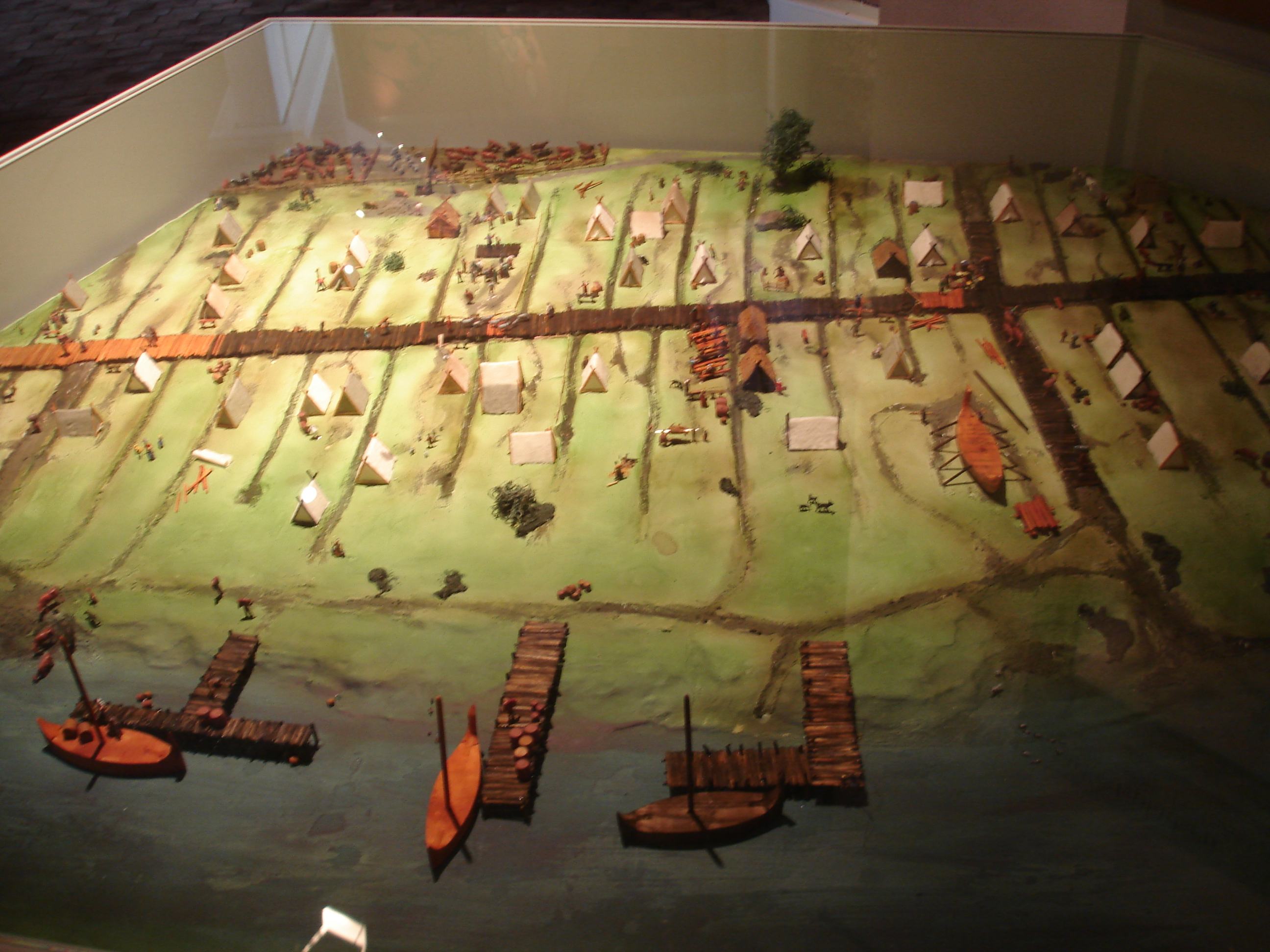
 Early Danish Trading Post
|
ECON 701 West Virginia University Fall 2026 Reynolds Hall 4201 12:30- 14:15 M-W |
 Beijing Shopping Mall
(UG)
|
|
|
||
| Instructor: | Professor Roger D. Congleton | . |
| Office: | 4131
Reynolds Hall E-Mail roger.congleton@mail.wvu.edu (The best way to contact Prof Congleton) |
. |
| Office Hours: | 2:30 - 3:30 Tuesdays and Wednesdays, and Friday afternoon by appointment |
|
|
|
||
| Optional Texts: | Nicholson,
W. Microeconomic Theory, Twelfth Edition.
(2016) |
|
| Knight, F. H. Risk Uncertainty and Profit. (1985/1921) Midway Reprint edition, University of Chicago Press. | . | |
| Mas-Colell, A., Green, J. R., and Whinston, M. D. (1995) Microeconomic Theory. Oxford: Oxford University Press | ||
| .Required Text |
Draft Textbook: The Calculus of
Commerce, available below through lecture links.
|
|
| Course Description |
Theory of consumer choice, utility theory, theory of the firm, theory of production, pricing in perfect and imperfect markets, risk and uncertainty, time, game theory and other topics are covered. | |
| Objective |
The goal of the course is to provide graduate student with a thorough understanding of the core neoclassical models, their most relevant extensions, and implicit foundational assumptions. It also attempts to give them an appreciation of their explanatory power by analyzing linkages between economic, political, and social systems | |
| .Course Organization: | Advanced
Microeconomics I is divided into three parts. The first
part of the course focuses on the core models and results
of economics. It reviews the theory of consumer behavior
(demand), theory of firm output decisions (supply). the
theory of firm production decisions and their connection
to a firm's cost functions, and models of equilibrium
prices. |
. |
|
|
The second part
explores extensions of the neoclassical model to choice
settings where time and uncertainty are important
features. It models inter-temporal choices and choices in
settings where outcomes or circumstances are probabilistic
rather than certain. It also develops models of innovation
and entrepreneurship. Innovation is an example of
decisionmaking under uncertainty and a source of
uncertainty. The third part explores implications of what might be a the framing institutions of markets. Many of these may be regarded as "market imperfections," but they are simply violations of some of the implicit assumptions about the setting in which trade takes place. Implications of theft, fraud, regulation, politics, and ethical dispositions are developed analytically. All these neglected factors can have significant effects on the manner in which markets operate and the extent of the networks of exchange, production, and innovation that typify contemporary markets. Part three concludes with an overview of welfare economics and its applications to markets, externalities, and system design. The course is lecture and web-text based. This website provides links to most materials used in the course. |
Undergraduate Math Econ Course |
| . | 2026 Tentative
Syllabus as a pdf file |
. |
| Dates | Topic |
|
| . | I. Market Equilibria and Comparative
Statics |
. |
| 19-Aug-26 | 1. Introduction to Course and Economic Models |
MWG: 1, 2 Kn 3 |
| . | Methodological
Individualism: What does rational choice mean to
economists? .Rational Choice as a modeling device.
Scarcity and optimization. Usefulness of models. [Slides] |
|
| 24-Aug — 31-Aug-26 | 2. Consumer Demand |
MWG: 5 |
| . | The
Geometry and Mathematics of Decisions to Purchase Goods
and Services, Cobb-Douglas Models, More General Models of
Consumer Choice
[HW 1] |
|
| 2-Sept-26 | 3. Supply |
MWG: 3, 5 Kn: 6 |
| . | The
Mathematics of Decisions to Produce Goods for Sale in the
Short Run and Long Run by Price-Taking Firms, Some
Implications of Diminishing Returns. Output decisions of
Price- Making
Firms. [HW 2] |
|
| 7-Sept-26 |
Labor Day, No Class |
|
| 9-Sept — 14-Sept-26 | 4. Production |
MWG: 3, 5 Kn: 4 |
| . | Decisions
about how goods are produced, and what they cost. Input
Prices, technology, and production costs for price-taking
firms. The demand for Inputs. Wages as a price.
[HW 3] |
|
| 14-Sept — 21-Sept-26 | 5. Equilibrium Prices |
|
| . | Market
clearing prices in the short run. Marshallian and
Ricardian Theories of Long Run Supply, Geometry and
Calculus-Based Models of Market Prices,
. [HW 4] |
. |
| II. Time, Risk, Uncertainty, Innovation and Markets | ||
| 23-Sept-26 | 6. Intertemporal Choice | |
| Making plans that take more than 1 "period" to execute. Time preferences and discounting. Present and future values as common denominators for choices with future effects. | ||
| 28-Sept-26 |
Review for Midterm Exam
Covering Part I (Prerecorded
overview of Part I) |
|
| 30-Sept-26 | MIDTERM
EXAMINATION (In Class, (1 side of 1 page of hand-written notes allowed.) |
|
| 5-Oct-26 | Midterm Exams Returned and Reviewed | |
| 7-Oct — 12-Oct-26 | 7. Economic Implications of
Risk |
N: 9, 10, 19
MWG: 13, 14
|
| Risk aversion and choice under uncertainty. Maximizing expected utility. The demand for Insurance and other risk pooling and shifting strategies. Choices with uncertain outcomes. Illustrations: purchasing goods with random quality, quality control in production, output decisions with random prices. [HW 5] | ||
| 14-Oct — 19-Oct-26 | 8. Ignorance and
Entrepreneurship |
N:9, 10;
MWG: 14 Kn: 9, 10
|
| Uninsurable Risks and the Usefulness of Reserves. Entrepreneurship as decisionmaking under uncertainty. Knight, Schumpeter, and Kirzner on Entrepreneurship. Entrepreneurs as Formateurs, Investing in Innovation, Innovation as a source of economic profits, Innovation as a source of uncertainty. [ HW 6] | Baumol (1968) Holcombe (1998) |
|
| (9) The "Simple" Economics of Information | ||
| 19-Oct — 21-Oct-26 |
Rational and Natural Ignorance,
Searching Model of Price Determination, Latent Demand,
Specialization--Human Capital as Knowledge. |
Stigler (1961) Hayek (1937, 1975) Macklup (1984) |
| Chapters not covered this semester: (10) "Goods" as Collections of Valued Attributes--Hedonics (11) Optimization by Multi-product Firms (12) Government Policies and the Extent of Markets |
Farrell and Rabin (1996) Lancaster (1966) Becker (1965) Brown et al (1979) Riley (1975) Baysinger and Butler (1985) |
|
| 26-Oct — 28-Oct-26 | (13)
Game Theory: Modelling Strategic Interactions |
|
| Games in Normal Form,
Nash Equilibria, Social Dilemmas, Coordination Games,
Games with infinite numbers of strategies, Mixed
Strategies, Existence of a Nash equilibrium,
Illustrations. |
||
| III. Social, Legal, and Political Underpinnings of Markets | ||
|
2-Nov — 4-Nov-26
|
14. Law and Economics |
MWG: 11, 12 |
| The Economics of Crime
the Extent of Markets, Fraud and the extent of Markets,
the Quality of Law Enforcement, Realizable Gains to Trade,
and the Extent of Markets
|
||
| 15. Politics and
Economics--Political Economy |
MWG: 21, 22 |
|
| . | Electoral Competition and Electoral Determined Public Policy, Market Adjustments to Public Policies, Investments in Rent Seeking and the Extent of Markets. [HW 7] | . |
| 9-Nov — 11-Nov-26 | 16. Ethics, Norms, and the
Efficiency of Markets |
Kn: 5, 11 |
|
|
Culture
and the Efficiency of Markets. Economizing on Ethical
Agents. Culture and the Extent and Growth Rates of
Markets. Extended Rational Choice Models. |
. |
| 17.
Firms as Organizations
(not covered this semester) |
||
| Decision making within
larger firms as Collective Choices. Decentralized
authority and agency problems. Relationships with
Government, Rent-Seeking as Profit Seeking, Do Firms
Maximize Profits? Multidimensional goals of some firms. |
||
| 18. Welfare Economics | ||
| Deciding what is best, Utilitarian Notions of Economic Efficiency, Cost Benefit Analysis, the Pareto Criteria, Contractarianism. The normative properties of exchange (w and w/o externalities). [HW 8] |
N: 9
MWG: 10, 15, 16
|
|
| 16-Nov-26 | Review for End Term Exam | |
| 18-Nov-26 | END-TERM EXAMINATION
(In Class, 1 page of hand-written notes allowed.) |
|
| 21-Nov
- 29-Nov |
FALL/Thanksgiving
BREAK |
Ideas for Papers |
| 30-Nov-26 | Exams returned and Reviewed |
|
| 2-Dec-26 | 19. Overview of the Course / Paper Workshop | |
| |
||
| 9-Dec-26 | 8-10 page own-work paper due at midnight on an applied micro topic (submitted via Email) | Ideas for Papers |
| Available for Zoom Meetings Re your
papers during exam week |
||
| |
|
|
| . | Grades: Midterm Exam | 35.00% |
| . | 8-10 page Paper | 25.00% |
| . | Endterm Exam | 35.00% |
| Homework |
5.00% |
|
| . | Marginal extra credit for helpful class comments (up to 5% bonus) |